
CRM, SCRM, AI CRM: Similar Names, Different Problems
Three labels a couple of letters apart, prices several-fold apart, and every demo claims to 'manage customers'. What CRM, SCRM and AI CRM each actually solve — remembering, reaching, keeping up — and the order to decide in before you look at any product.
Key takeaway
CRM makes customer records and pipeline traceable; SCRM moves customer operations into social channels like WeChat; AI CRM layers lead scoring, drafting and summarising on top of either — added capability, not a new species. Choose by where your customers are and what hurts most; clean data comes before AI.
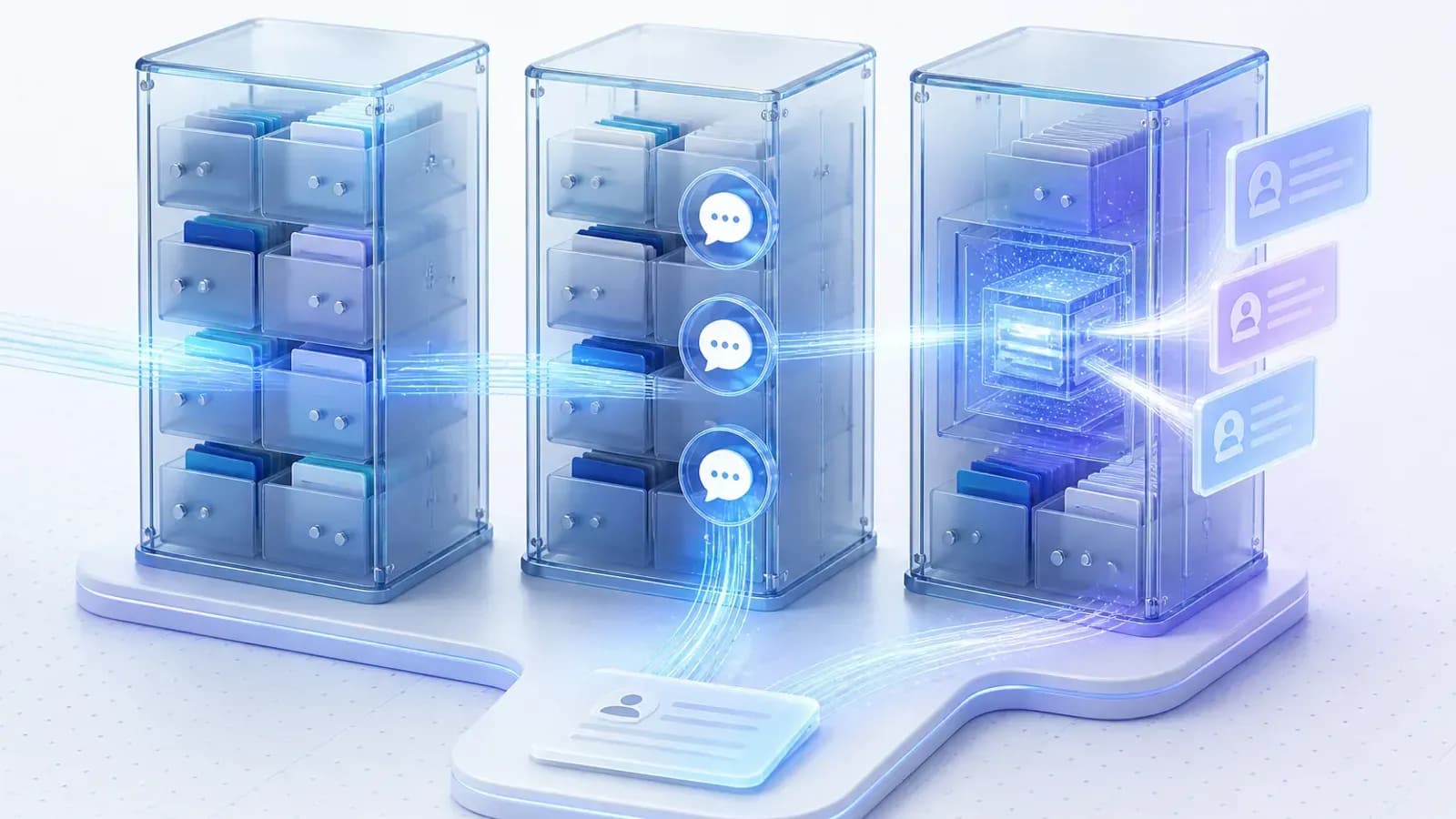
An owner shopping for a sales system is quickly surrounded by three labels: CRM, SCRM, AI CRM. The names differ by a letter or two, the prices differ several-fold, and every demo appears to 'manage customers' — as if any choice would do, and any choice could be the wrong one.
The root of the confusion is treating the three as versions of the same thing. They are answers to three different problems. Separate the problems, and the choice gets much easier.
CRM: making customer records and sales progress traceable
CRM (customer relationship management) is the oldest and most fundamental layer. At its core sits a structured customer database: who the customer is, which industry, who the key contacts are; what was said at each follow-up, which stage the deal has reached, what value is expected; and after closing — contract, payments, service history.
The problem it solves is plain: moving customer assets out of the salesperson's phone and into the company's system. Without a CRM, a sales departure roughly equals customer loss, and the only way for an owner to know what sits in this month's pipeline — and where each deal is stuck — is to ask around. CRM answers 'can we remember, can we see'.
SCRM: moving customer operations into social channels
The extra S stands for Social, and the background is distinctly local: customers' daily attention lives inside social apps like WeChat. Closing a deal starts with adding a contact, running group chats, posting to Moments; repeat purchases and referrals run on communities and private-domain operations. A classic CRM keeps records — it cannot reach actions that happen inside social scenes.
So SCRM centres on touchpoints rather than records: receiving and assigning contacts, operating group chats at scale, publishing content centrally, capturing customer behaviour in social contexts. It answers 'can we reach, can we operate'. If your deals close mainly inside WeChat — retail, education and local services are typical — the SCRM dimension matters. If your customers move through tenders, email and site visits, that S means little for you.
AI CRM: added capability, not a new species
Lately many products carry the 'AI CRM' label. Unwrapped, the substance is AI capabilities layered on top of a CRM or SCRM base: ranking leads by priority from historical data so sales know whom to call first; drafting the next message from customer background and follow-up records; distilling a call or chat into key points and filling the fields automatically, sparing manual entry.
Note the word 'layered' — AI does not change the nature of the base, and it cannot make up for a missing one. To tell a real AI CRM from a renamed one, a single test is enough: is the AI wired into your business flow? Reading your customer data, writing results back into the system, triggering inside the daily route your salespeople actually walk — that is wired in. A chat window parked in the corner of the interface is no different from opening a general AI tool in another browser tab.
How to choose: answer three questions before viewing products
Question one: where are your customers? If deals and repeat business happen inside the WeChat ecosystem, weight SCRM heavily. If customers advance by phone, email and visits, a classic CRM is enough.
Question two: what does your sales process look like? High ticket size, cycles measured in months, several people in the decision — process management is essential, so pick a CRM with solid stages and pipeline views. Fast, small-ticket business runs better on something light; a heavy system only slows the rhythm.
Question three: what hurts most right now? 'We cannot remember customers or see progress' is a CRM problem. 'We added contacts but cannot operate them' is an SCRM problem. 'Too many leads to keep up with' is where AI earns its keep. Diagnose first, then buy the medicine — in the reverse order, money is usually wasted.
A caution: with poor data, AI cannot help
A final splash of cold water. AI ranks leads only if the system holds enough accurate history; AI drafts follow-ups only if customer background and communication records are complete. A company with patchy, casually entered customer data can buy the most expensive AI CRM on the market and receive a processing plant with no raw material. Govern the customer data first — then AI has something to work with.
The steadier path is to do system selection and process mapping together: draw the full route a lead travels from first touch to close, and let each step deposit its data naturally. The breakdown in Routing Inbound Inquiries to the Right Person shows the way of thinking, and the sales follow-up reminder workflow walks through a complete example of designing follow-up reminders.