
What Is Multimodal AI? Text, Images and Audio, Understood Together
Snap a photo of an invoice and the AI reads out the amount and issuer — that is multimodal capability, not classic OCR. What sets it apart from text models with bolt-on vision, what businesses can do with it, and which steps still need a human.
Key takeaway
Multimodal AI means one model that directly understands and generates text, images and audio, rather than relying on add-on tools that translate images into text first. Scans, recordings and photos can now enter automated workflows — but small print and figures still need human checks.
A crumpled expense receipt, photographed and sent to an AI. Seconds later the amount, date and issuer are laid out neatly — and when you follow up with "can this go through as travel expenses?", it keeps answering. The most common first reaction: isn't this just OCR? Scanning software could read text ten years ago.
Similar, but not the same thing. Understand where the difference lies, and you understand what multimodal AI actually adds.
How AI used to "see": a relay of translations
Before multimodal models, AI systems handled images through a relay. A dedicated recognition tool converted the image into text first — OCR read the characters, an image classifier produced labels — and that text was handed to a language model to reason about. The language model never saw the image. It was reading someone else's notes.
The problem with relays is that information gets lost in the retelling. A table's structure, the position of a stamp, a handwritten correction — labels and plain text struggle to carry them, and whatever the retelling drops, no amount of downstream intelligence can recover. It is the difference between hearing a photo described and looking at it yourself.
Multimodal: one model that sees for itself
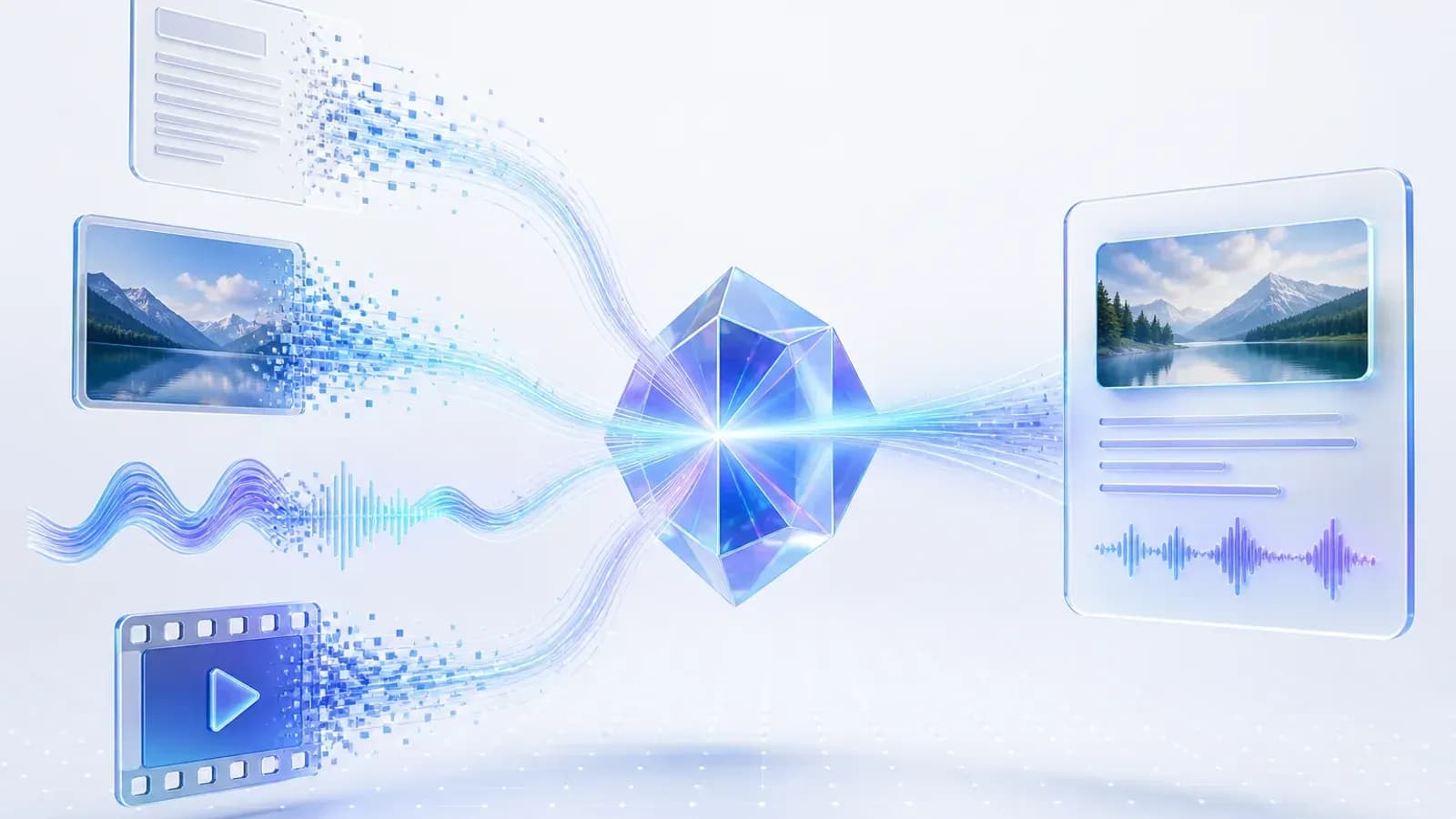
Multimodal AI means one model that directly understands and generates several forms of information — text, images, audio, and increasingly video. An image is no longer translated into labels; it is processed natively, as one of the model's mother tongues.
To put it in one picture: the old approach was a person listening to someone describe a photograph; a multimodal model is a person looking at the photograph. The former's understanding is capped by the quality of the description. The latter notices what no description would think to mention — the clause crossed out by hand in a scanned contract, the stray object in a product photo's background, the hesitant "I suppose... that works" in a customer call.
For businesses, more material can now enter the pipeline
The real business value of multimodal AI is not the demo moment. It is a plain structural change: material that could never enter an automated workflow now can. Much of what a company knows was never tidy text to begin with — it is scans, photos, recordings, video. Three directions are already reasonably mature:
- Invoices and contracts: read key fields from scanned invoices, delivery notes and contracts, extract terms, compare versions — without keying documents in by hand.
- Products and assets: generate descriptions straight from product photos; auto-tag image and video libraries by content, so one sentence of search finds "the clip with the product close-up".
- Support and meetings: turn customer voice messages into action items and tickets; turn meeting recordings into structured minutes rather than raw transcripts.
If your team produces content, multimodal also changes the cost structure of the asset stage — copy, voice-over and video can share one pipeline, which we break down in building a short-video production line with AI.
It understands — that doesn't mean it reads accurately
Now for the cold water. Multimodal models are strong at grasping the gist and unreliable at precision, in well-documented ways: small print and numbers in dense tables get misread or attributed to the wrong row; counting is untrustworthy — treat "how many people are in this photo" as a guess; and on a poor-quality scan, the model may quietly invent a plausible but wrong reading.
So the test for which steps to hand over is the same as for any AI capability: what does an error cost, and how easily is it caught? Gist reading, first-pass screening, tagging — hand them over. Reimbursement amounts, contract terms, account numbers — anything where one wrong character causes real damage stays under human review. For how to tier that review by risk, see Reviewing AI Output: A Tiered Checklist.
The entrance changed; the discipline didn't
Seen from the business side, multimodal AI widens what kind of material can enter your workflows. It does not rewrite how workflows should be designed. Which steps run automatically, which require confirmation, what catches a failure — those principles were set in the text-only era, and they stand unchanged.
For a decision-maker evaluating a multimodal feature, treat "it can see and listen" as the premise rather than the selling point, and ask the question that matters more: if this step misreads, who notices, and what does it cost? When that question has a clear answer, multimodal AI starts earning its keep.